
BEER: Tap or Bottle?
Draft and bottled beer come from the same place—the fermenting tank. “But, really, everyone knows there’s a difference in how they actually taste,” says Sybil Taylor, communications manager at Steamwhistle Brewery. “A lot of the difference has to do with variables along the way. So, a lot of it has to do with packaging.”
Bridgid Young, Brewer at the Mill Street Brew Pub agrees, “There is the perception that draft and bottled beer taste different, but most frequently they are not different beers. They are coming from the same place.” She points out another variable – how the beer is being served.
We spoke with the ladies from Toronto’s microbreweries to dig up the details about the difference between draft and bottle.

The packaging
“Beer is drawn from a tank, which is the last place it goes before packaging,” says Young.
The process of bottling beer varies by brewery but the important factor in the process is how much oxygen remains in the bottle between the beer and the cap. To minimize oxygen, Steamwhistle uses a Krones bottling line, “the Mercedes of beer packaging,” according to Taylor. When capping the bottles, they use fobbing, “a process that agitates the bottle and pushes as much air as possible out before the bottle is capped,” says Taylor. “Some breweries are better at capping than others and the way a bottle is capped will affect how long it lasts,” she adds.
Bottles are sanitized and sterilized before being filled, and in some cases they are also pasteurized. Taylor says, “Most commercial beers contain chemicals and are pasteurized by being pushed through a giant oven essentially cooking the beer.” Steamwhistle uses microfiltration instead, using micro porous membrane filters that produce microbiologically stable beer without pasteurization and retain more of the beer’s original qualities.
Young points out that the colour of the bottle—clear, green or brown—can also be a factor because “there is some potential light penetration to the beer if it’s in a glass bottle that could change the flavour of the beer. Obviously, in a keg there is no light at all so that beer would be protected better against UV.”
When packaging draft beer, the keg is filled with carbon dioxide and the Co2 is displaced with beer directly from the tank so there is absolutely no oxygen or light.
“Carbonated beer goes directly into the keg and then it’s put into a keg fridge,” says Young, “How frequently the establishment cleans their draft lines will seriously impact the flavour and the aroma of the beer,” she says.
The service
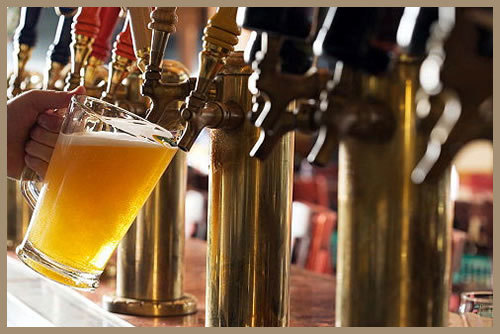
The flavour of draft beer depends almost entirely on the maintenance of the beer lines. Young says, “Every establishment is going to have a different regime for line cleaning and if they aren’t cleaned enough, and if the person pouring your beer into a draft class isn’t rinsing your glass appropriately, that could be changing the flavour of the beer.”
Taylor agrees that lines must be cleaned regularly and that kegs and bottles must be stored at cool temperatures to ensure they do not spoil.
Probably, the most important thing about serving beer is using proper glassware. When drinking beer directly from a bottle, “you are unable to enjoy the aromas and add the aromas to your tasting notes,” explains Taylor. Draft or bottle, “you should always drink beer from a glass, and the glass must be cleaned, free of soap resin, and served with the proper amount of head,” she says.
Unfortunately, clean glassware is not the case at most of Toronto’s bars, with bartenders placing glassware directly from the dishwasher onto a wooden shelf for the resin to dry inside, and killing the flavour profile of the beer even further by not rinsing the glass properly.
So, some might say that a bottle is the safer bet when you find yourself in a dive bar, but draft beer is less likely to be contaminated in any way as long as it comes out of a clean line. And in both cases, make sure your glass is rinsed properly for the best beer experience. When you can taste beer properly, it is much more enjoyable to drink seasonal and craft beers in a city full of microbreweries.
On a side note, Young mentions one variation of bottled beer—bottle conditioned beers.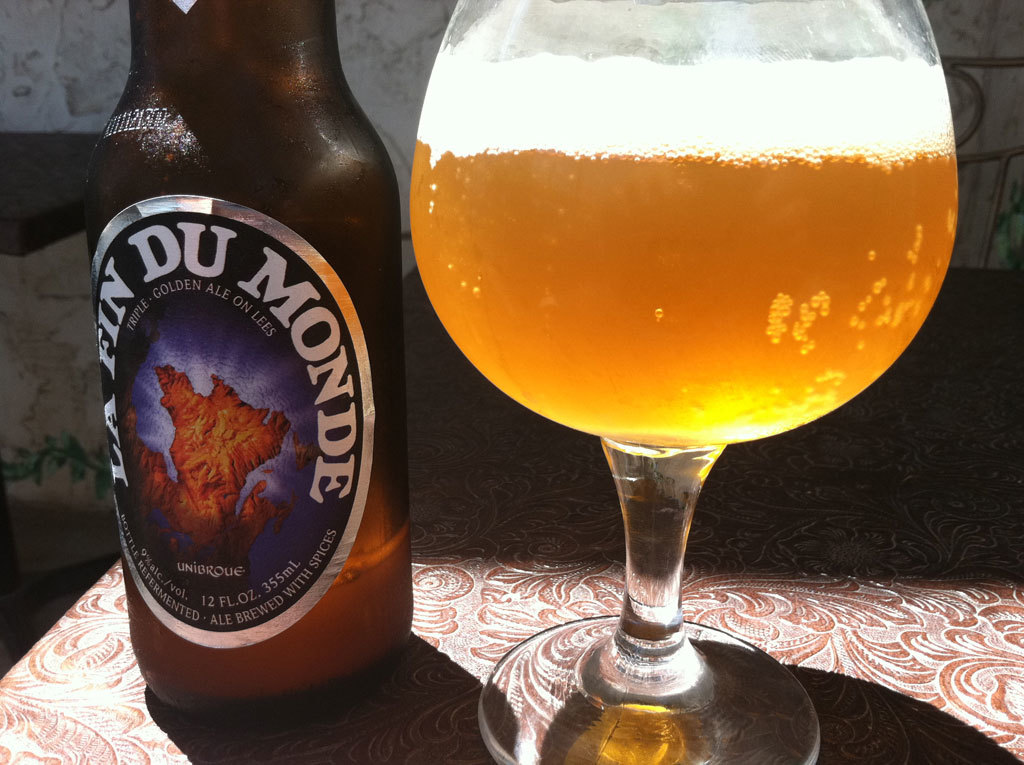
Bottle conditioned beers are brewed the same way, except the brewers add extra yeast and sugar to the bottom of the bottle to spark a secondary fermentation after the beer is capped. “So, those beers are living things to some degree because they are still in contact with some of the yeast and they’re going to evolve quite a lot as time goes on,” Young says.
“Unibrew beers like Blanche de Chambly and La Fin du Monde would be commercial examples of bottle fermented beers available always,” says young. These beers are especially interesting because the secondary fermentation in the bottle “does change the flavour significantly and gives the beer characteristics that you wouldn’t find in filtered forced-carbonated beer. Also the general character of the beer tends to be more elegant and the carbonation tends to be a bit more refined than force carbonated beer, so it’s perceived differently on the palate,” she adds.
Bottle conditioned beers are a great option for someone who enjoys bottled beer and wants to try something unique.
